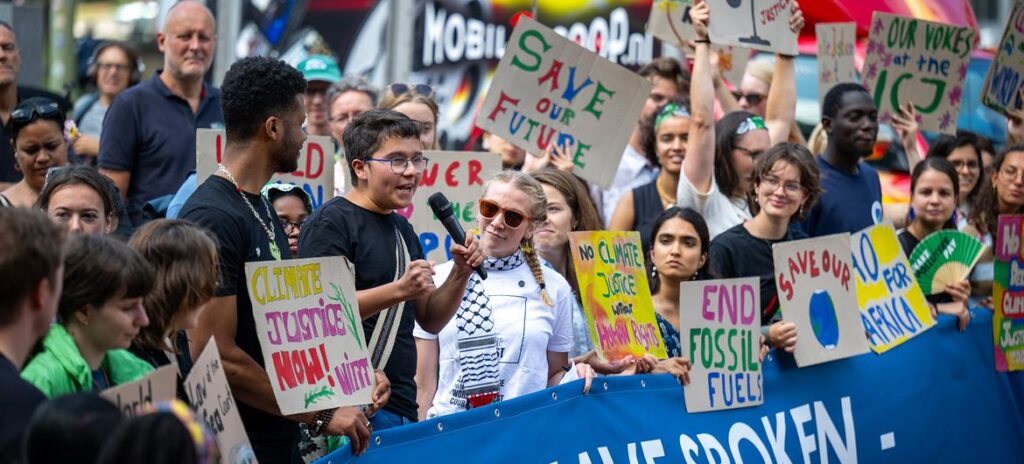
In July this year (2025) the International Court of Justice ruled that countries are legally obligated to reduce their emissions and to protect the climate, placing unprecedented legal pressure on states to meet their climate responsibilities.
The Court was asked by the UN General Assembly to clarify two fundamental questions: (a) What are the obligations of states with respect to climate and environmental protection and (b) What are the legal consequences when states have caused significant harm to the climate system?
With respect to a) the Court ruled that obligations under the Paris Agreement on climate change to limit global warming to 1.5°C above pre-industrial levels, known as nationally determined contributions (NDCs), should not be considered discretionary but rather must reflect a state’s “highest possible ambition” and, collectively, be capable of achieving the 1.5°C goal under the Paris Agreement.
Currently (NDCs) are voluntary and non-binding and therefore can be easily reneged on. This verdict by the court suggests that if States breach these obligations then they will incur legal responsibility and may be required to cease the wrongful conduct, offer guarantees of non-repetition and make full reparation depending on the circumstances. This bolsters the case for strong action on the climate even where the political will is absent since it can have international legal implications.
With respect to b) the court also ruled that “Failure of a state to take appropriate action to protect the climate system from GHG emissions — including through fossil fuel production, fossil fuel consumption, the granting of fossil fuel exploration licences or the provision of fossil fuel subsidies — may constitute an internationally wrongful act which is attributable to that state.”
Of additional interest is the fact that the Court ruled that climate action is not governed exclusively by climate treaties but by the entire body of international law, and that if these obligations are breached, then the state is under a “continuing duty to perform the obligation breached” and provide “full reparation to injured States.”
[1] https://news.un.org/en/story/2025/07/1165475
[2] https://www.linkedin.com/pulse/icjs-climate-ruling-goes-far-beyond-legal-battles-between-ztcje/
Leave a Reply